The Master Guide to Cooking Oxtail Potjie with Red Wine: Selection, Deglazing, and Acid Balancing
Created by Potjie AI Expert
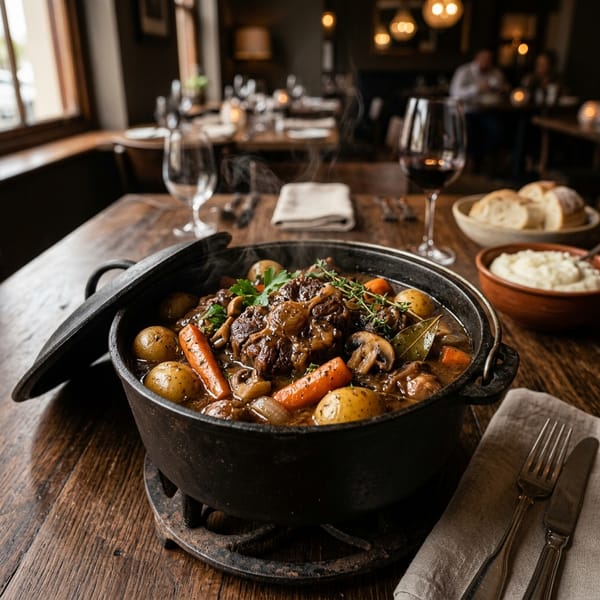
Unlock the secrets of using red wine to transform your oxtail potjie into a rich, velvety masterpiece. Learn how to select the perfect South African cultivar, master the art of deglazing cast iron, and balance acidity for ultimate depth of flavor.
10 mins
4h 40m
All Levels
0
Ready to light the fire?
Start the step-by-step live stage timer immediately, or create a shared checklist for your braai group.

What You Need
7 items-
750 ml Robust South African Red Wine (Pinotage, Shiraz, or Cabernet Sauvignon) (Pantry & Aisle)
-
1 Size 3 Three-Legged Cast Iron Potjie Pot (Cooking Tools)
-
1 piece Long-Handled Wooden Spoon (Cooking Tools)
-
500 ml Rich Beef Bone Broth (Pantry & Aisle)
-
15 g Dark Chocolate (70% Cocoa) or Brown Sugar (Pantry & Aisle)
-
1 strip Fresh Orange Peel (Zest only, no white pith) (Produce)
-
3 cloves Fresh Garlic (bruised) (Produce)
Step-by-Step Instructions
Selecting the Right South African Red Wine
10mNot all red wines are suited for the long, slow cook of an oxtail potjie. Avoid highly oaked, light, or sweet wines. Instead, opt for a robust South African Pinotage, Shiraz, or Cabernet Sauvignon. Pinotage offers a smoky, dark fruit profile that beautifully complements outdoor wood fires, while Cabernet Sauvignon provides the structure and heavy tannins needed to break down the rich, gelatinous fats of the oxtail during its multi-hour simmer.
Pre-heating and Preparing the Fond
15mSet up your fire with hard wood (like Rooikrans or Kameeldoring) to establish a steady bed of coals. Heat your empty cast iron potjie over medium-hot coals. Before adding any liquid, your oxtail must be deeply browned to leave behind caramelized proteins (fond) stuck to the bottom of the pot. This brown residue is the foundation of your red wine sauce; do not let it burn, but ensure it is deeply caramelized.
The Art of Deglazing
10mOnce the meat is browned and temporarily set aside, pour in half of your red wine while the pot is still hot. It will sizzle violently. Use your long-handled wooden spoon to vigorously scrape up all the caramelized fond from the bottom of the pot. This process, known as deglazing, dissolves the rich flavor compounds into the wine. Let the wine simmer and reduce by half to cook off the harsh alcohol bite, leaving behind a concentrated, aromatic base.
Balancing Acid, Tannins, and Richness
5mSlow-cooking red wine concentrates its natural acidity and tannins, which can sometimes make a potjie taste sour or astringent. To counter this, introduce balancing elements. Add a single strip of orange peel (to cut through the heavy fats with citrus oils), the bruised garlic, and a small block of high-quality dark chocolate or a pinch of brown sugar. The bitterness and sweetness of the chocolate round out the sharp edges of the wine, yielding a velvety, glossy gravy.
The Slow Simmer and Heat Management
240mReturn the meat to the pot, pour in the remaining red wine and the beef bone broth. Cover with the lid and reduce the heat significantly. For a red wine oxtail potjie, you want a very gentle, lazy simmer—about one bubble every few seconds. High heat will cause the wine to turn bitter and the gelatin in the oxtail to break down too rapidly, ruining the emulsion of your sauce. Maintain a small, consistent ring of coals around the base of the pot for 3 to 4 hours.
Expert Potjiekos Answers
Frequently Asked Questions
How long does The Master Guide to Cooking Oxtail Potjie with Red Wine: Selection, Deglazing, and Acid Balancing take to cook on the fire?
The Master Guide to Cooking Oxtail Potjie with Red Wine: Selection, Deglazing, and Acid Balancing requires approximately 10 minutes of preparation and 4h 40m of cooking over controlled wood or charcoal coals (5 timed stages).
What size potjie pot do I need for The Master Guide to Cooking Oxtail Potjie with Red Wine: Selection, Deglazing, and Acid Balancing?
This recipe is calibrated for a standard South African No. 3 cast-iron potjie pot (7.8 litres), serving 6 to 8 guests. Use the interactive Pot Size Scaler on this page to adjust quantities automatically for a No. 1, No. 2, No. 4, or No. 6 pot.
Should you stir this potjie while it is simmering?
No—never stir an authentic South African potjiekos once the vegetables are layered on top of the meat. Keep the lid closed over 4 to 6 gentle coals so rising steam cooks each layer to tender perfection without turning potatoes into mush.
Keep Exploring
Related Potjie Recipes & Cast-Iron Guides
 Beef
Traditional South African Oxtail Potjie Recipe (Slow-Cooked Red Wine Beesstert Potjiekos)
Authentic 4-hour South African Oxtail Potjie (Beesstert Potjiekos) recipe. Slow-braised in red wine and beef stock, layered with baby potatoes, carrots, and mushrooms over wood coals.
Guides
Potjie Pot Sizes Chart (No. 1 to No. 25): Litres, Servings & Buying Guide
Complete South African cast iron potjie size chart from No. 1/4 (0.7L) to No. 2 (6L), No. 3 (7.8L for 6-8 guests), No. 4 (9.3L), and No. 25. Compare exact litres, guest servings, 3-legged vs flat-bottom pots, and buying tips.
Guides
The Ultimate Potjie Sauce Blueprint: How to Balance, Flavour, and Reduce Potjiekos Liquids
A watery or bland potjie can ruin hours of patient cooking around the campfire. Master the South African craft of building the quintessential potjie sauce with our guide to liquid ratios, sweet and acid balance, and sticky lid-off reduction techniques.
Guides
The Master Guide to Crafting Luxurious Sauces for Creamy Chicken Potjies
Unlock the outdoor culinary secrets behind creating an ultra-velvety, rich, and balanced sauce for any creamy chicken potjie recipe. Learn how South African bush chefs deglaze pan fond, balance acidity with fresh cream, and naturally thicken sauces over open coals without clumping or splitting.
Guides
How to Master Chicken Potjies: Preventing Mushy Meat, Rubber Skin, and Dry Breast
Mastering chicken in a cast-iron potjie requires a completely different approach than dense, tough cuts like oxtail or mutton. Learn the secret techniques for achieving golden browned skin, perfectly juicy breast meat, and flawless structural integrity over the coals without turning your dish into a shredded mess.
Guides
The Ultimate South African Potjie Sizes & Servings Guide: Find Your Perfect Fit
Confused by potjie pot numbers? Our comprehensive South African guide breaks down every potjie size from No. 1/4 to No. 24, detailing exact capacities, dimensions, and realistic serving sizes so you never underfeed your guests again.
Community Comments
No comments yet. Be the first to start the conversation!